By Rejhan Kavazbasic · 9 min read · Updated 5 November 2026
Fixing fit problems: pain, falling out, one side quieter
Does your IEM sound thin, fall out or hurt after an hour? For each problem the likely cause and what to do about it, from tip size to wearing the cable over your ear.
First: how it should feel
After a few minutes you should barely notice an IEM that fits well. It seals without pressing, stays put when you turn your head and sounds equally loud left and right. If one of those three isn't true, find your problem below. The fix almost always starts with the tip, and that's good news: tips cost a few euros.
| Problem | Usually | Try first |
|---|---|---|
| Thin bass, sharp treble | The tip leaks | One size up, or foam |
| One side quieter | Seal on one side, or earwax in the nozzle | A different size per ear, clean the nozzle |
| Pain after an hour | Tip too big, or the shell presses | One size down, a softer tip |
| Falls out when walking | Tip too small, cable pulls | One size up, cable over the ear |
| Cable taps with every step | Cable noise (microphonics) | Cable over the ear, slider up |
| A crackle when you put it in | Air pressure on the driver | Put it in more slowly |
Thin bass or sharp treble
This is almost always air leaking past the tip. The driver can't build up pressure in your ear canal, and you hear that first in the bass. The treble then sounds sharper, simply because there's less underneath it.
- Press the IEM in gently with a finger. If the bass gets fuller, the tip leaks. Go one size up.
- Could it be sitting too shallow? Pull your ear up and back while you put it in. That straightens your ear canal and lets the tip slide further in.
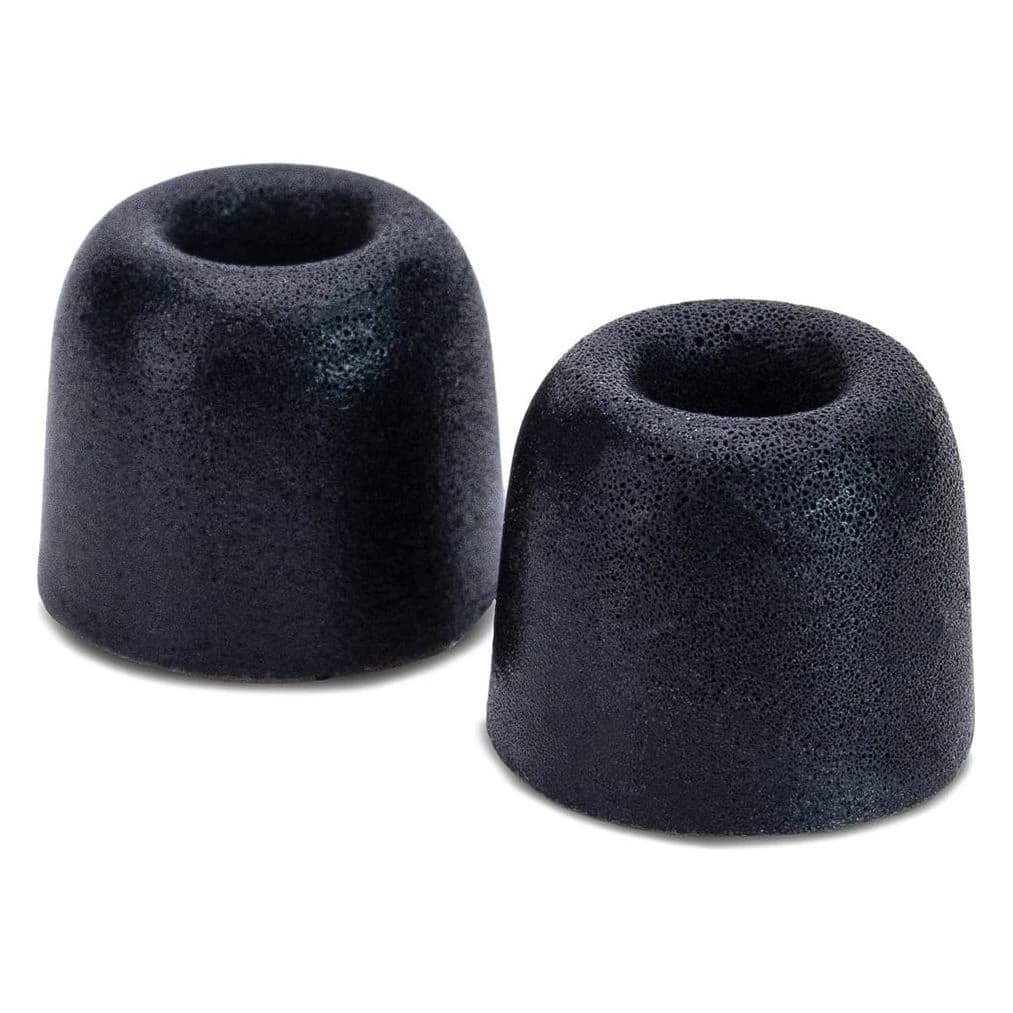
- Still thin? Try foam or another kind of silicone. Foam expands until it fills your ear canal.
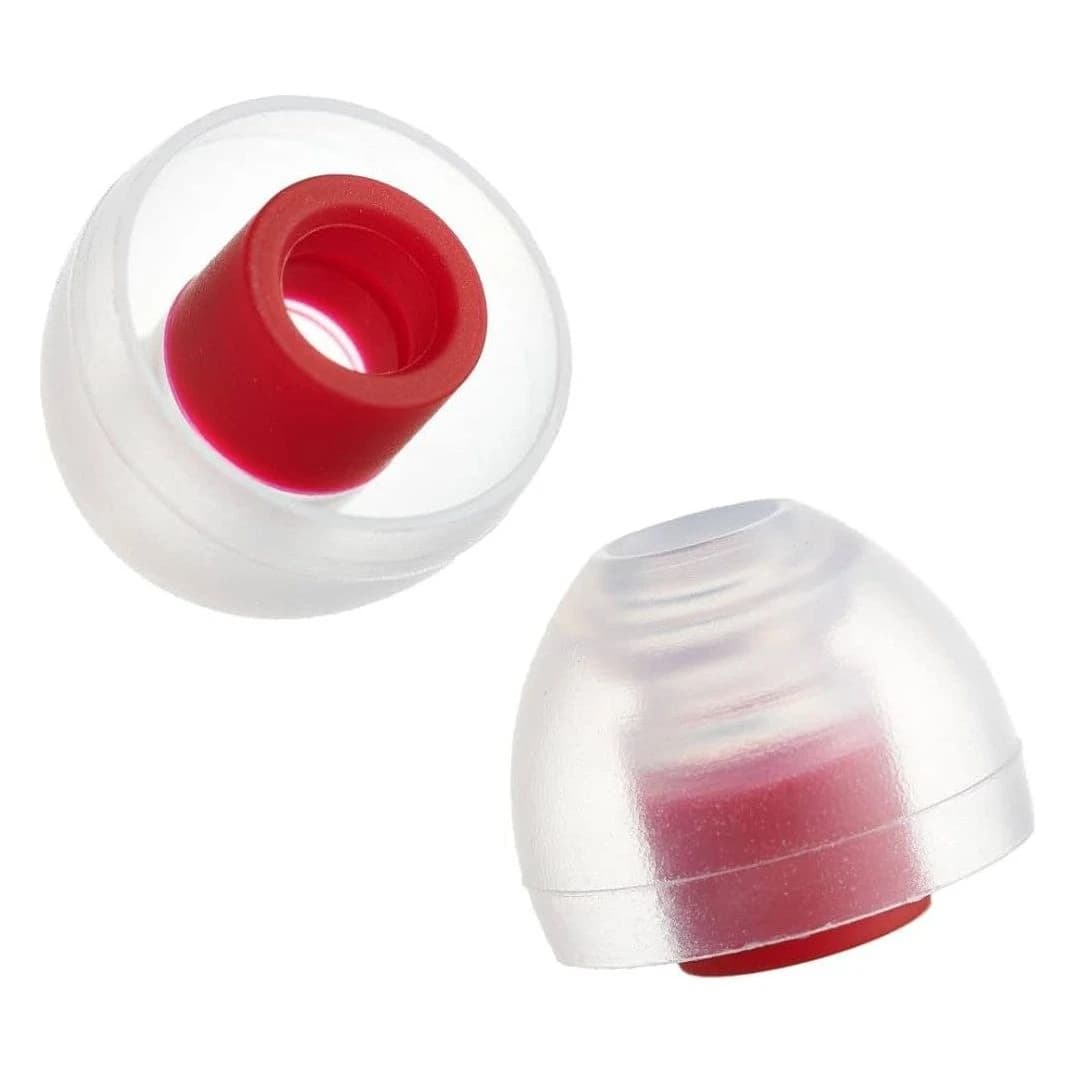
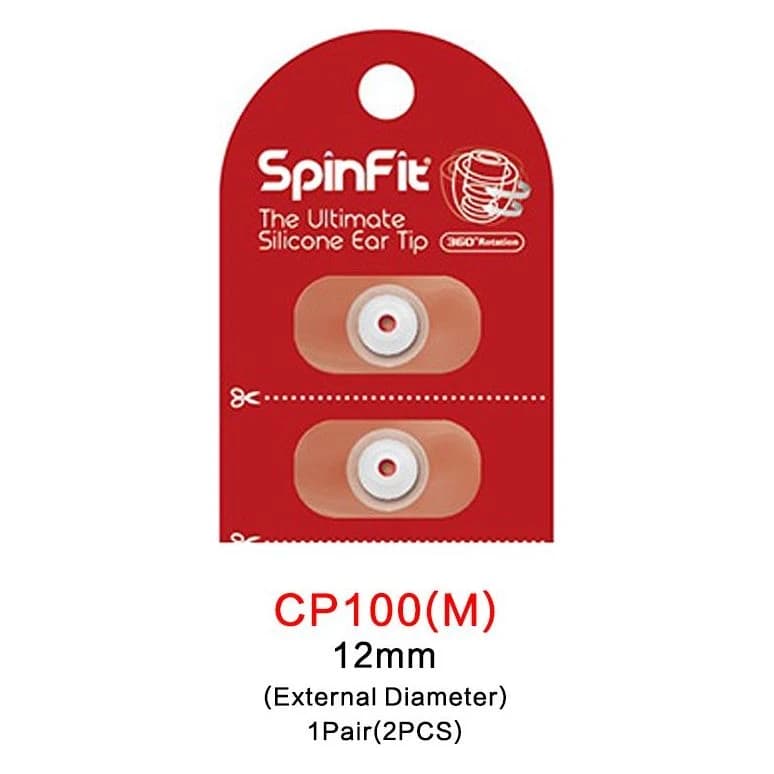
Sounds fine until you talk or chew? Your ear canal changes shape a little when you move your jaw. A tip that's just too small loses its seal for a moment. One size up, or a SpinFit CP100 with its flexible core, helps against that.
Quick check
Pause the music and say something. If your own voice sounds muffled and close, it's sealed. If it sounds normal, air is still leaking.
One side sounds quieter
Often it's simply the seal on that side. Many people's left and right ear canals differ a little, so the same tip size seals on one side and not the other. Work through the steps from top to bottom and you'll find the cause without guessing.
One side sounds quieter
Press the quiet side in gently. Does it now sound as loud as the other?
Yes →The seal. Try a different size or type of tip for that ear.
No ↓Is there earwax or dirt on the mesh of the nozzle?
Yes →Brush the nozzle clean with a dry, soft brush.
No ↓Does it crackle or cut out when you gently move the cable near the plugs?
Yes →The cable or the connector. Try another cable.
No ↓Is the same side also quieter with other earphones or headphones?
Yes →Check the balance setting on your phone. If it's centred, have your ear checked by your GP.
No ↓
- The balance on your phone: on an iPhone under Settings > Accessibility > Audio & Visual, on Android usually somewhere under Accessibility. It should be in the middle, and sometimes it isn't by accident.
- Does one side sound not quieter but odd, hollow and without bass, as if the sound comes from outside your head? Then a flat 2-pin plug may be the wrong way round in the IEM. Turn it around. More in our guide to cables and connectors.
- Clean earwax out of the nozzle with a dry brush, never with water or a needle. Our cleaning guide shows how.
When it's your ear
Do you hear less on the same side with every earphone, or does that ear feel blocked? See your GP. A plug of wax in your own ear or a hearing problem won't be fixed by a different tip.
Pain or pressure points after an hour
An IEM shouldn't hurt, not even after a few hours. Pain usually has one of these causes:
- The tip is too big. It pushes against the wall of your ear canal all the time. That feels like a dull pressure that starts to ache after a while. Go one size down. If that no longer seals, try foam: it adapts to your ear canal instead of pushing against it.
- It sits too deep. Don't push an IEM further in than it takes to seal. A double-flange tip goes deeper than a normal tip, so it isn't for everyone.
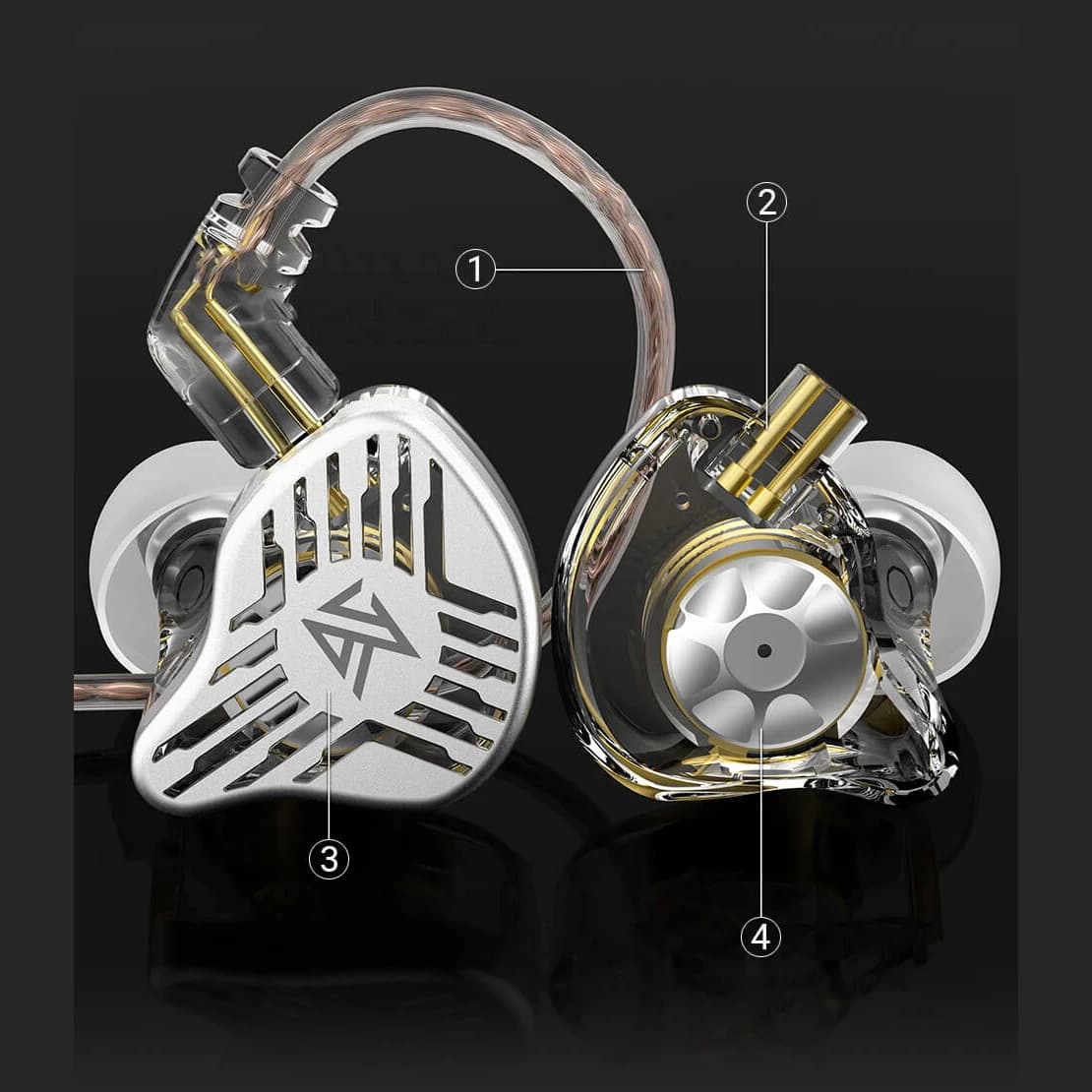
- The shell presses. If it hurts in one spot, such as the small flap in front of your ear canal or the rim of the bowl of your ear, the shell touches you there. Turn the IEM a little or try a tip that lets it sit less deep. If that doesn't help, read the last part of this guide.
Give your ears a break now and then, especially at first. That's good for your hearing too: our safe listening guide explains why how long matters as much as how loud.
When to stop
Itching, pain that stays after the IEMs are out, or an ear that feels inflamed: stop using your IEMs and see your GP. Clean your tips regularly and don't share them.
Falls out, or the cable taps
An IEM that slips out when you walk or work out usually has a tip that's too small, or a cable pulling on it. The tapping and rubbing you hear when the cable brushes your collar is called microphonics. The sound travels through the cable and the shell into your ear, and because your ear canal is sealed, you hear it all the more. Both have the same fix: the cable over your ear.
Left ear, seen from the side
Put the IEM in with the cable pointing up. Check L and R.
Lay the cable over the top of your ear. A pre-shaped ear hook follows that curve by itself.
Behind your ear the cable runs down, out of sight.
If your cable has a slider where it splits, push it up to just under your chin. Or run the cable under your shirt.
- Go one size up or try foam. Foam expands and stays in better when you move.
- After putting it in, turn the IEM a little backwards so the shell locks into the bowl of your ear.
- Run the cable under your shirt or jacket. A tug on the cable then won't pull the IEMs straight out.
- If your cable has pre-shaped ear hooks, don't bend them straight. They're meant to follow the curve of your ear.
A crackle when you put it in
Do you hear a click or a crackle when you put an IEM in or press it, and then it's gone? That's called driver flex. Putting the IEM in compresses the air in your sealed ear canal. That pressure briefly pushes the diaphragm of a dynamic driver out of shape, and you hear it as a click. It happens more with IEMs that have little venting, and on its own it doesn't mean anything is broken.
- Put the IEM in slowly, so the air has time to escape.
- Pull your ear up and back while you put it in.
- Turn the IEM into place instead of pushing it in.
- A tip with a different shape, or foam, can reduce it.
Does it also crackle while you listen, without touching the IEM? Then something else is going on. Email us and we'll look into it with you.
A different tip: which one and when
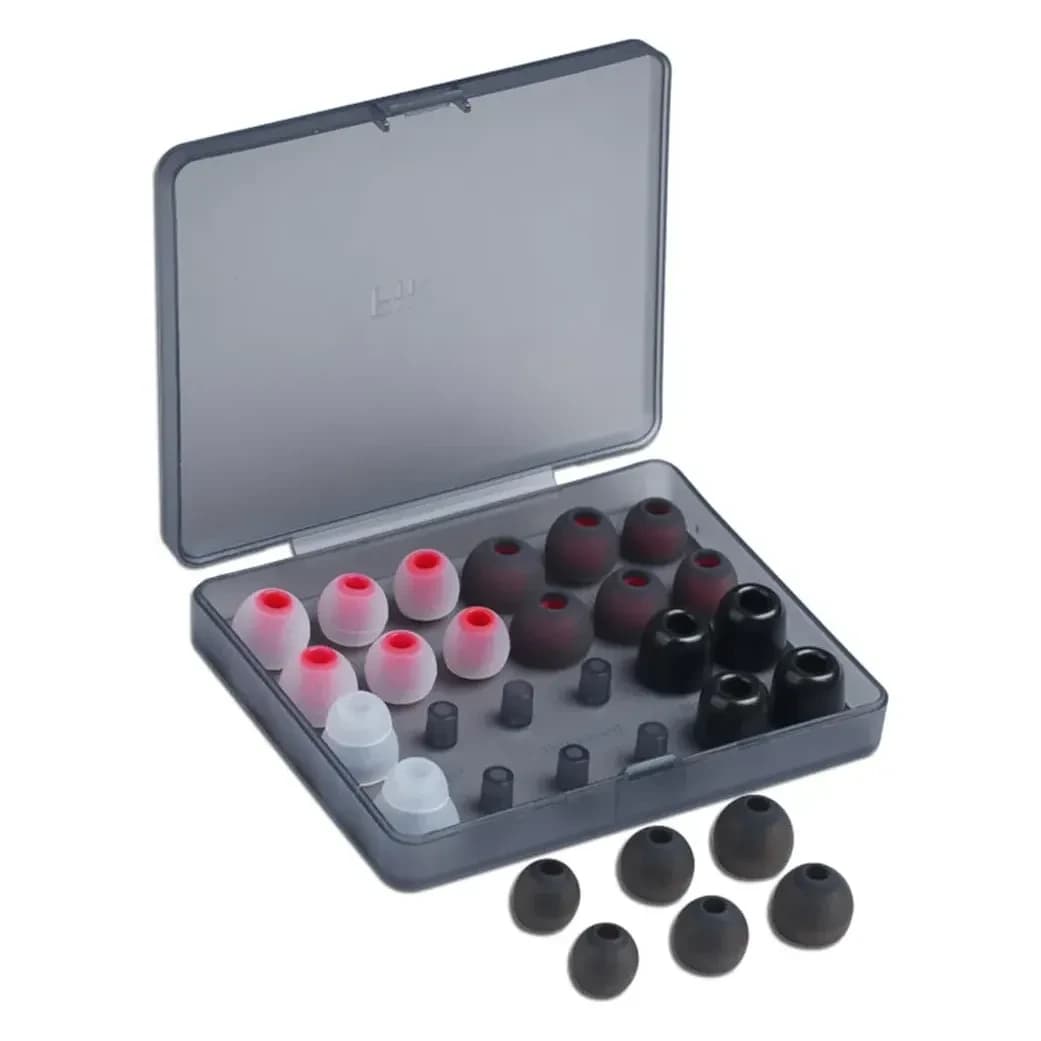
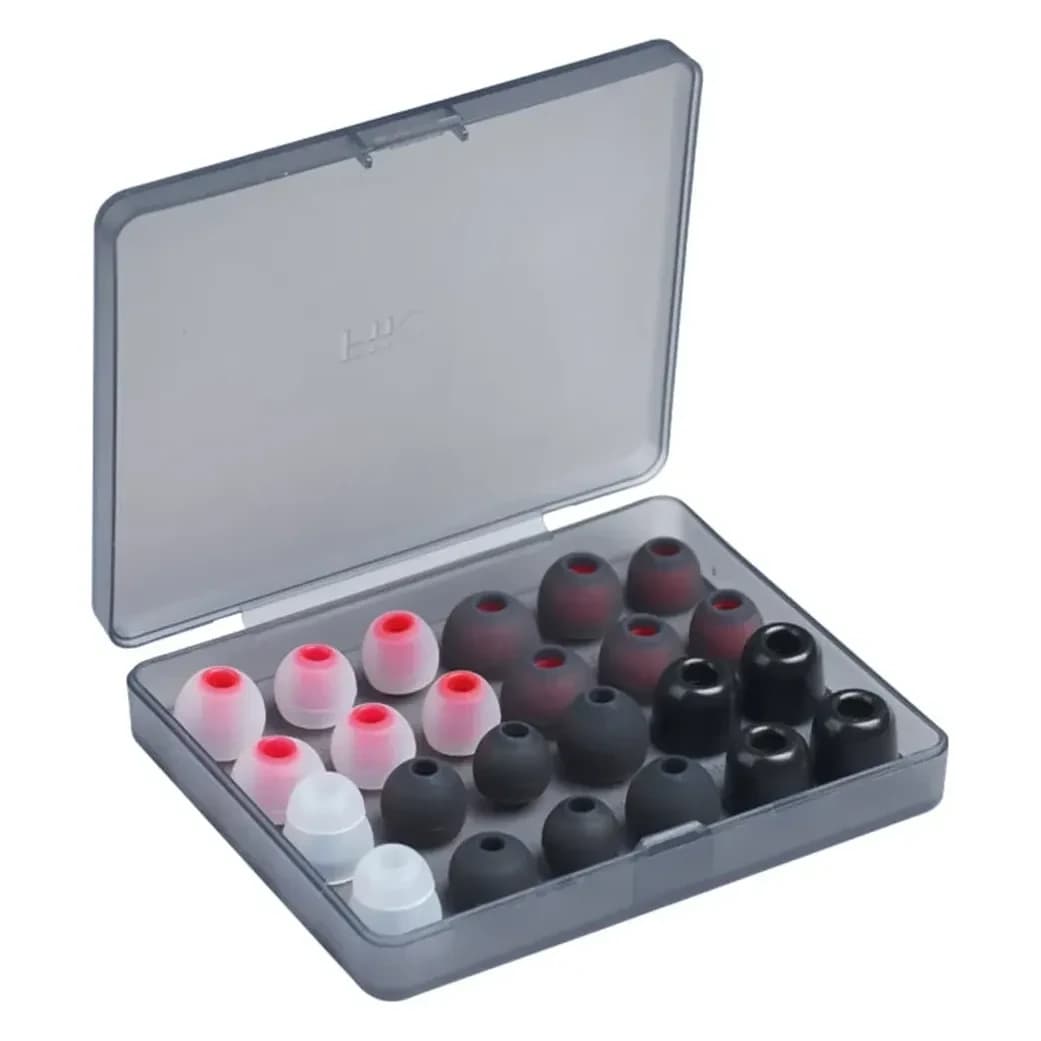
We compare silicone, foam and SpinFit in detail in our ear tips guide. Here's just what to try for each problem:
| Your problem | Try | In our range |
|---|---|---|
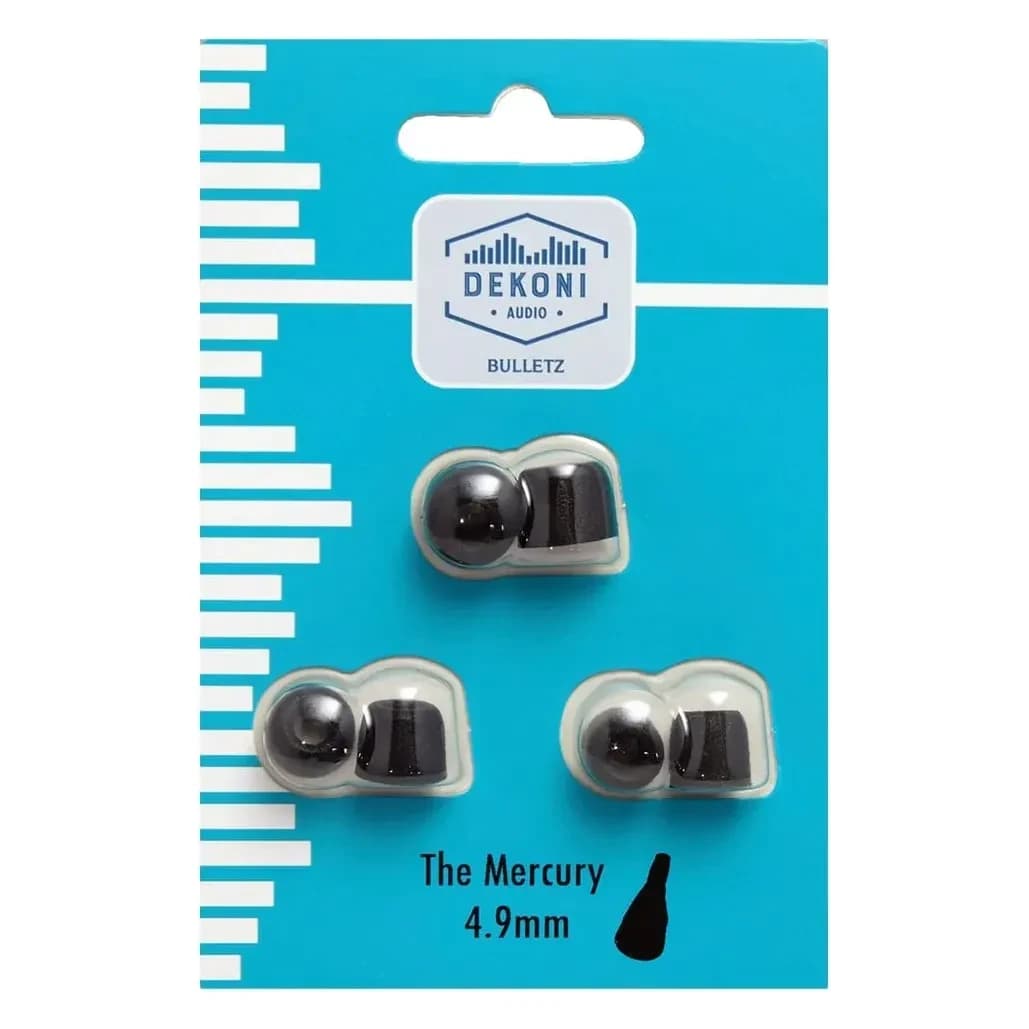
| No seal with any size | Foam | TinHiFi and KZ foam, Dekoni Bulletz |
| Seal goes when you talk or chew | A tip with a flexible core | SpinFit CP100 |
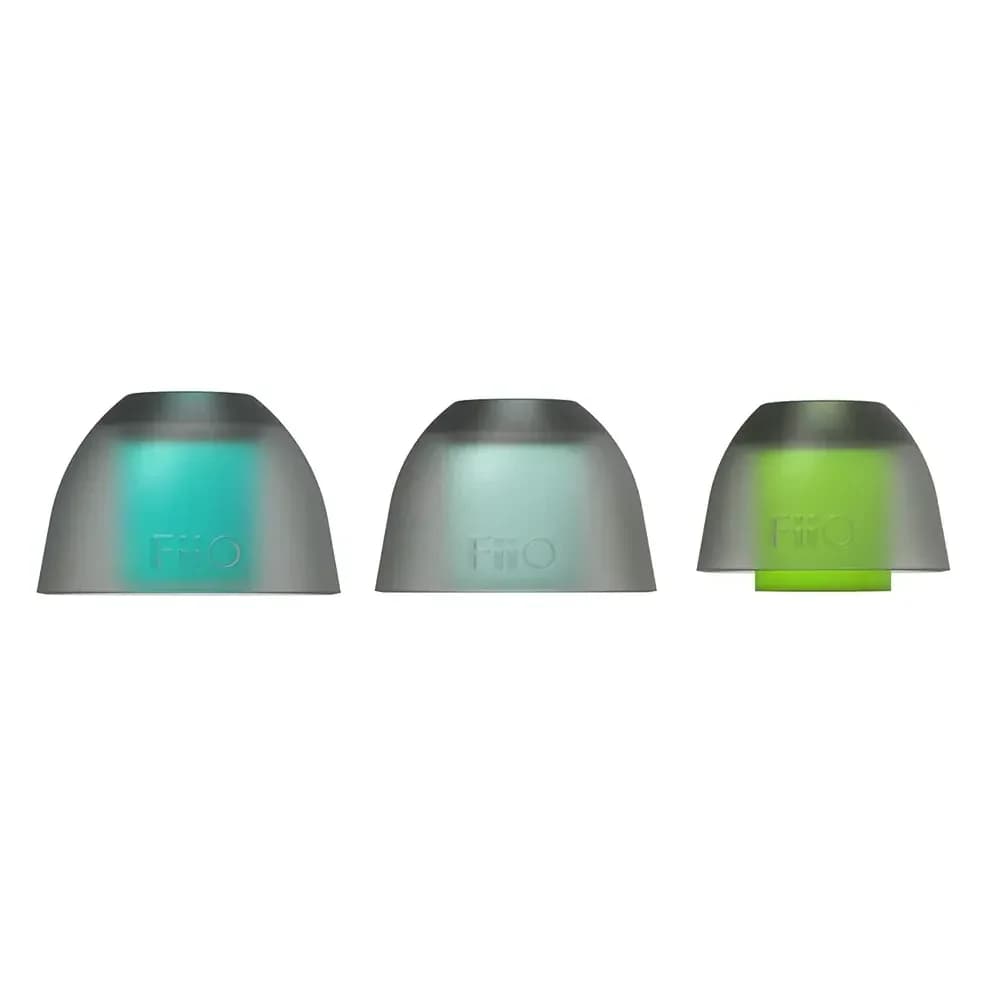
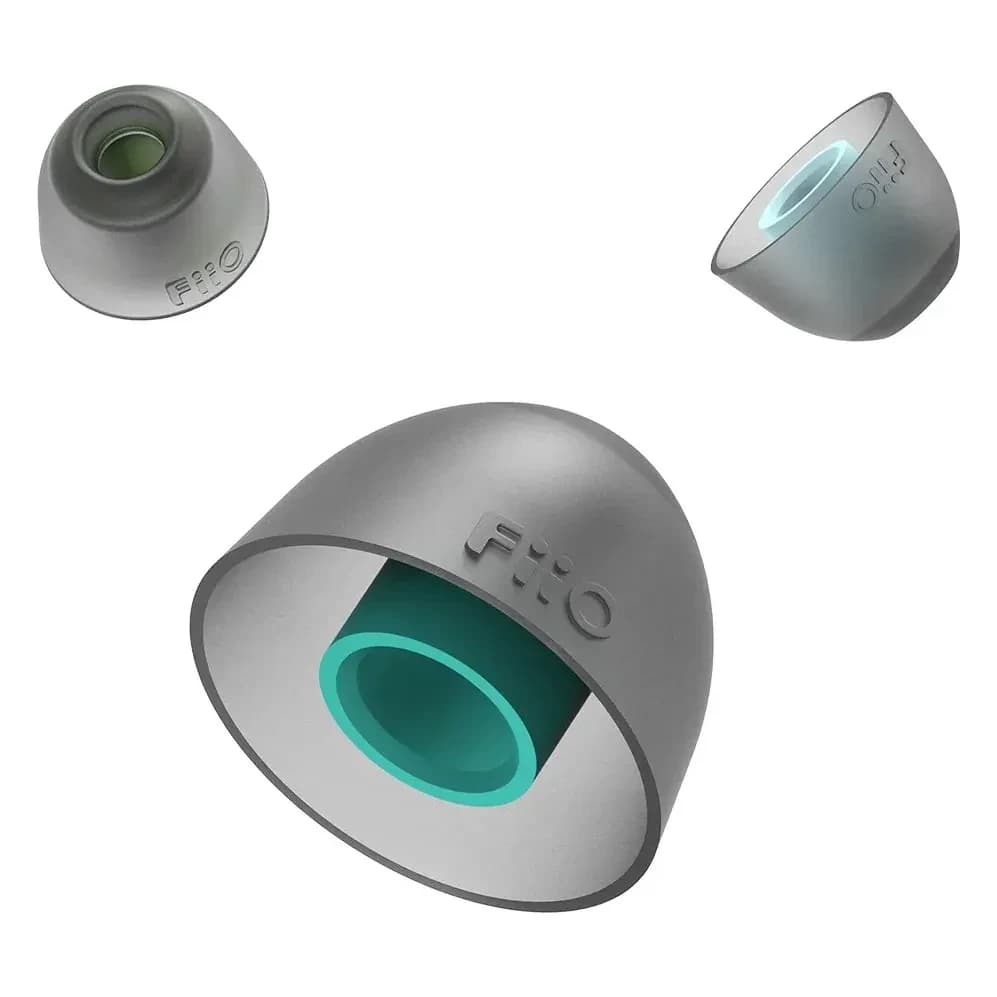
| Tip presses, even a size smaller | Thinner, softer silicone | FiiO HS18, FiiO HS20 |
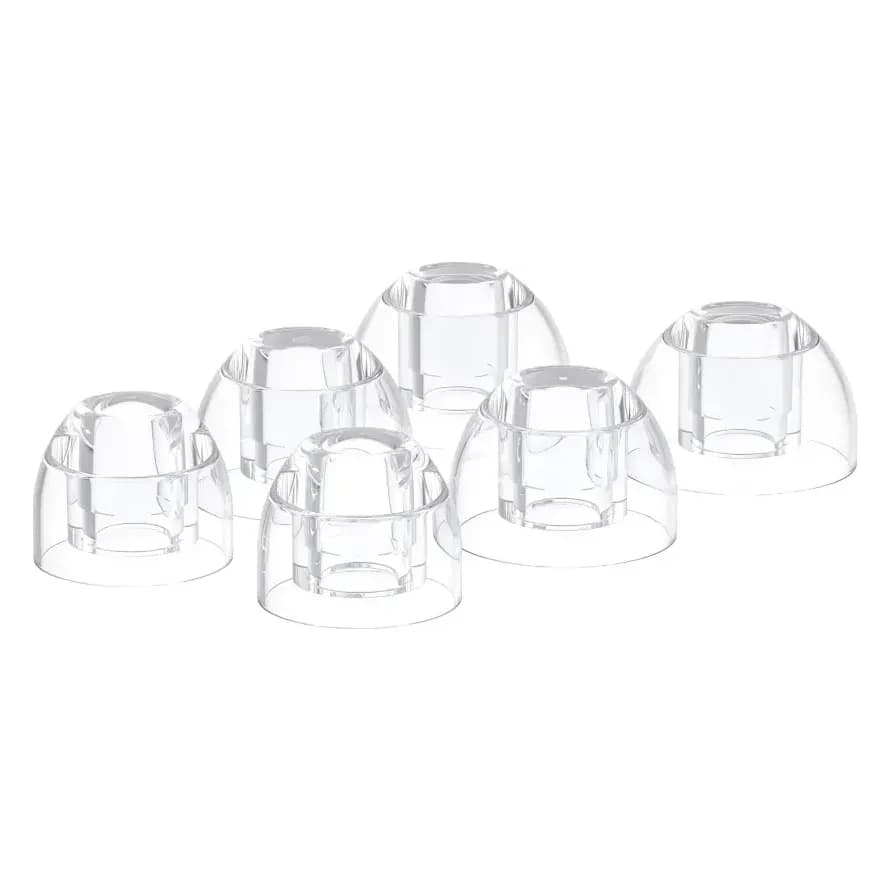
| You don't know where to start | A set with different types | FiiO HS19 (12 pairs, five types) |
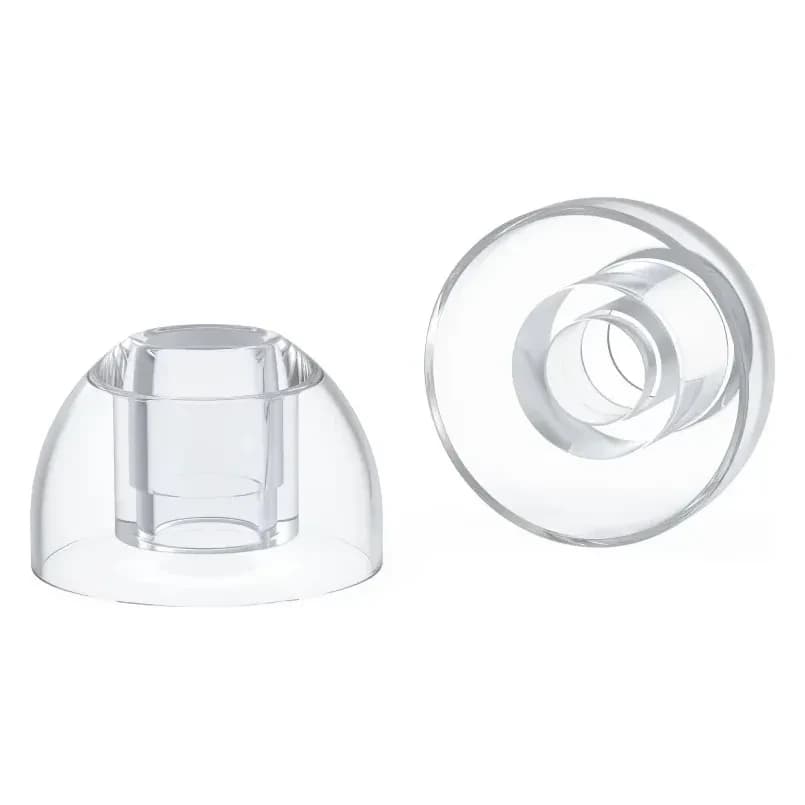
Also look at the nozzle, the little tube the tip sits on. Its thickness differs per IEM. A tip should click on firmly. If it slides on too easily, it can stay behind in your ear when you take the IEM out. If the opening is too narrow, you'll barely get it on. The product pages say what fits: the HS18 is for nozzles from 5.0 to 6.5 mm, the Dekoni Bulletz Mercury has a 4.9 mm core.
The hole in the tip plays a part too. A wide bore usually lets more treble through, a narrow one softens the treble a little. If your IEM sounds sharp to you, a tip with a narrower bore or foam is worth a try.

When it's the IEM
Sometimes an IEM just doesn't suit your ear, and that's not your fault. Ears vary hugely in shape. You can tell like this:
- It only seals when you press it in, with every tip. The shell stops it before the tip is deep enough.
- You feel pressure in the same spot, whichever tip you try.
- The shell sticks far out of your ear and wobbles when you move your head.
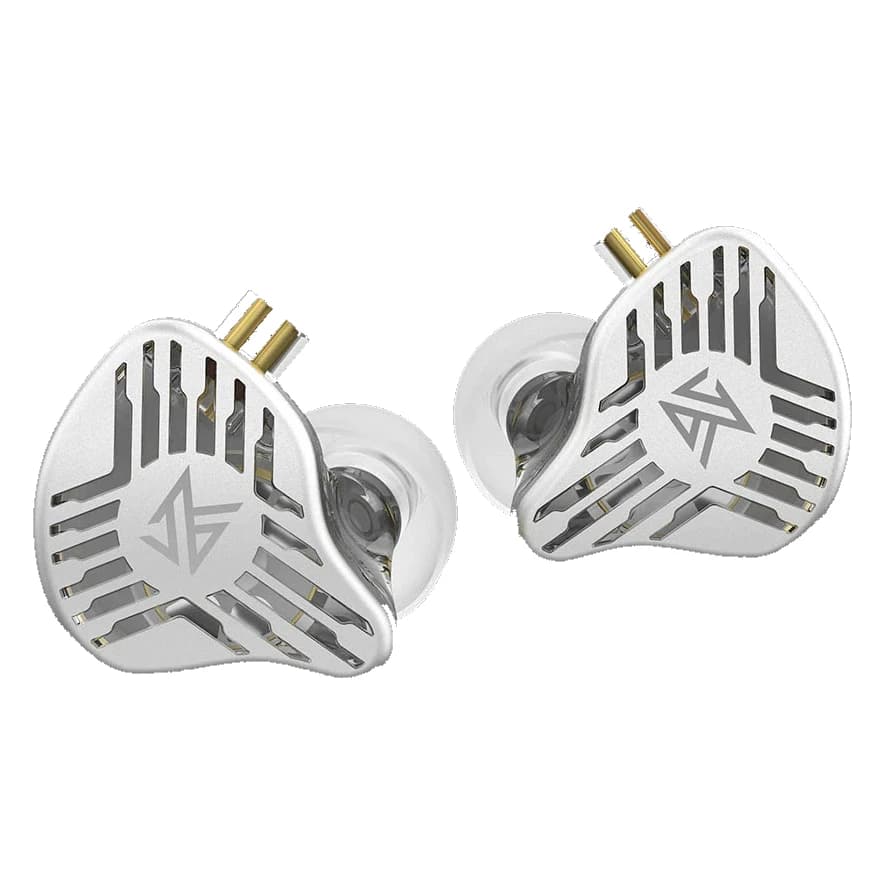
Then a different shape helps. The KZ EDS has a small shell and sits comfortably in smaller ears. The FiiO FP3 weighs about 6.5 g per side, and FiiO shaped it to touch less of your ear. If you can't stand a sealed ear canal at all, an earbud such as the FiiO FF3S might suit you. It rests in your outer ear without sealing, with less bass and less isolation as a result.
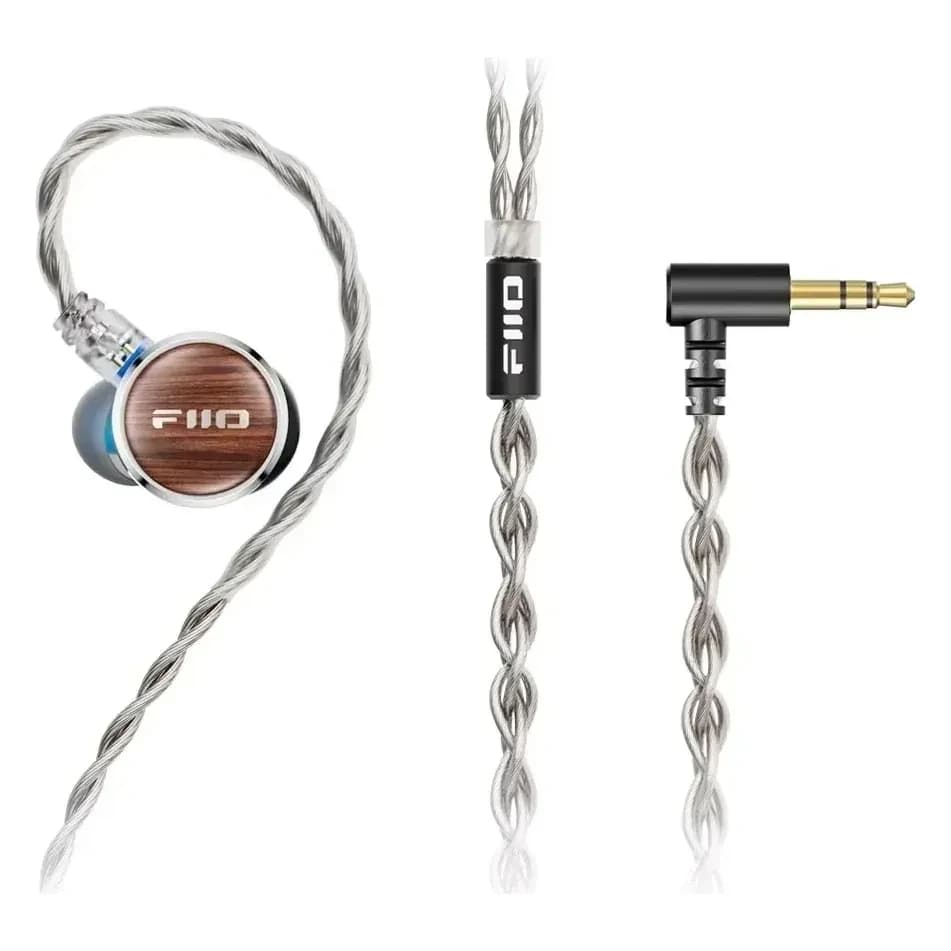
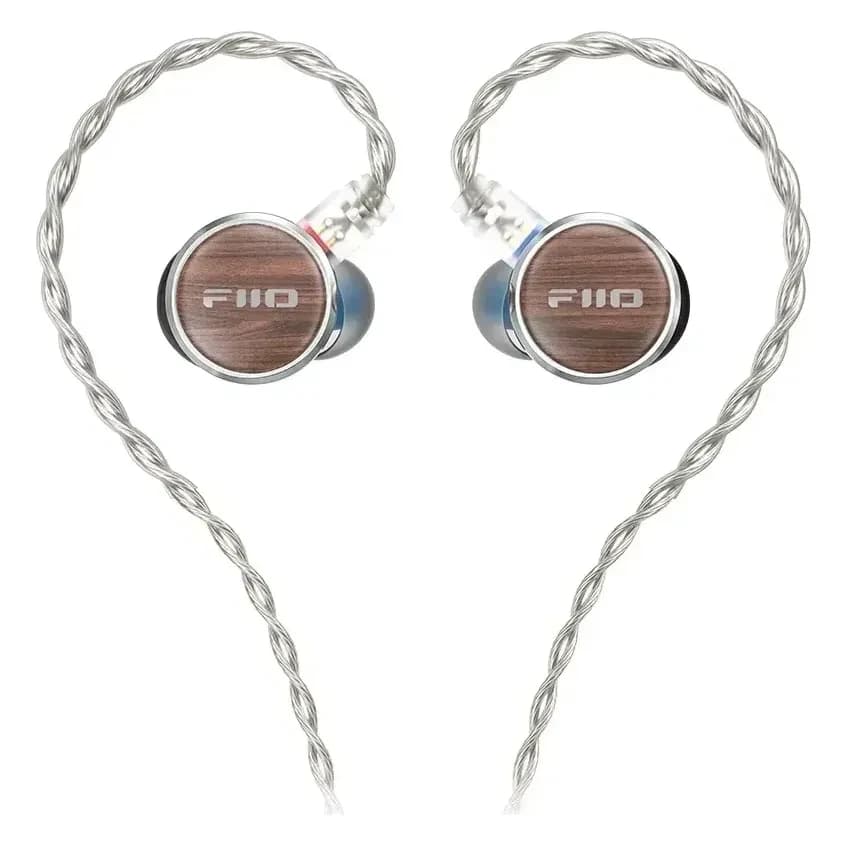
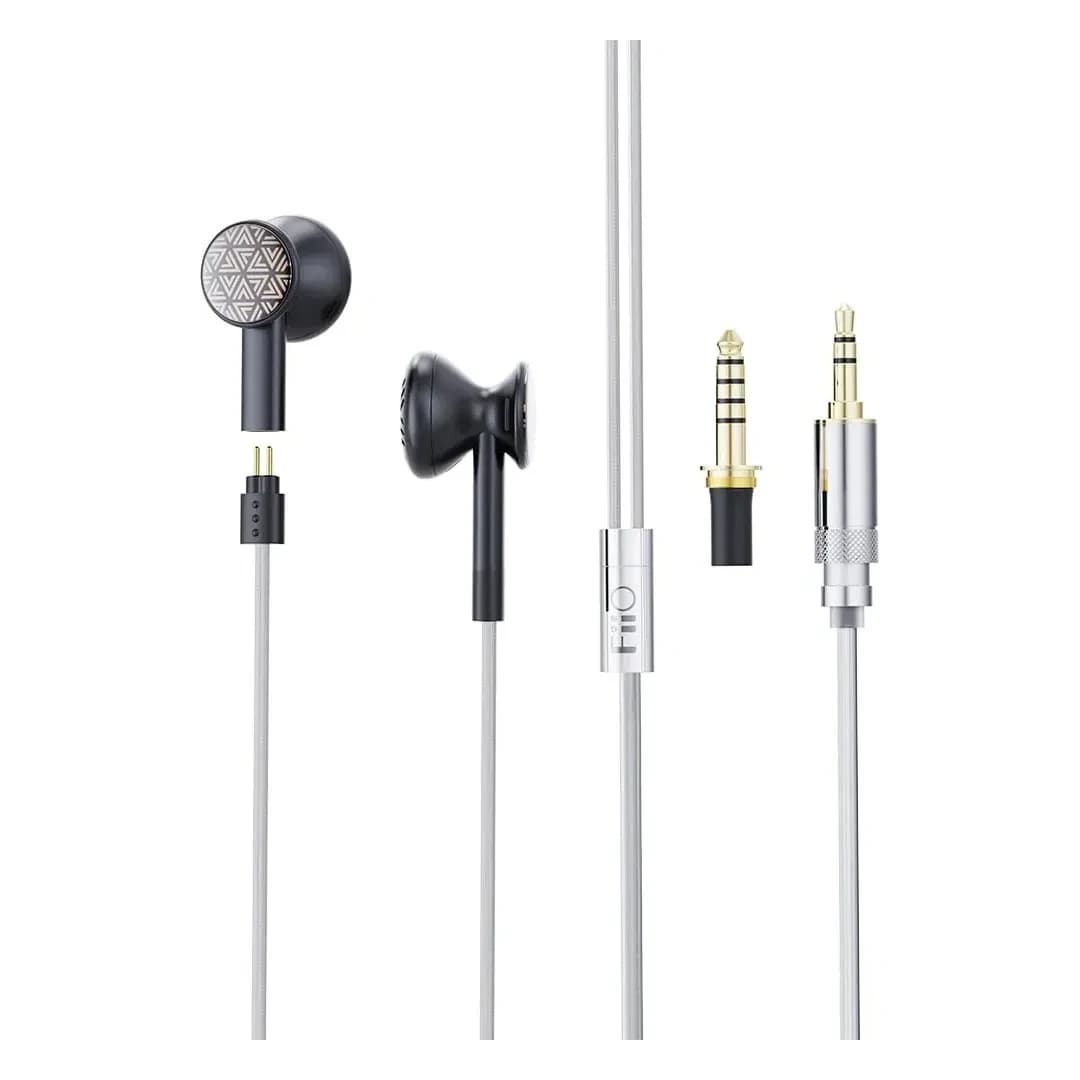
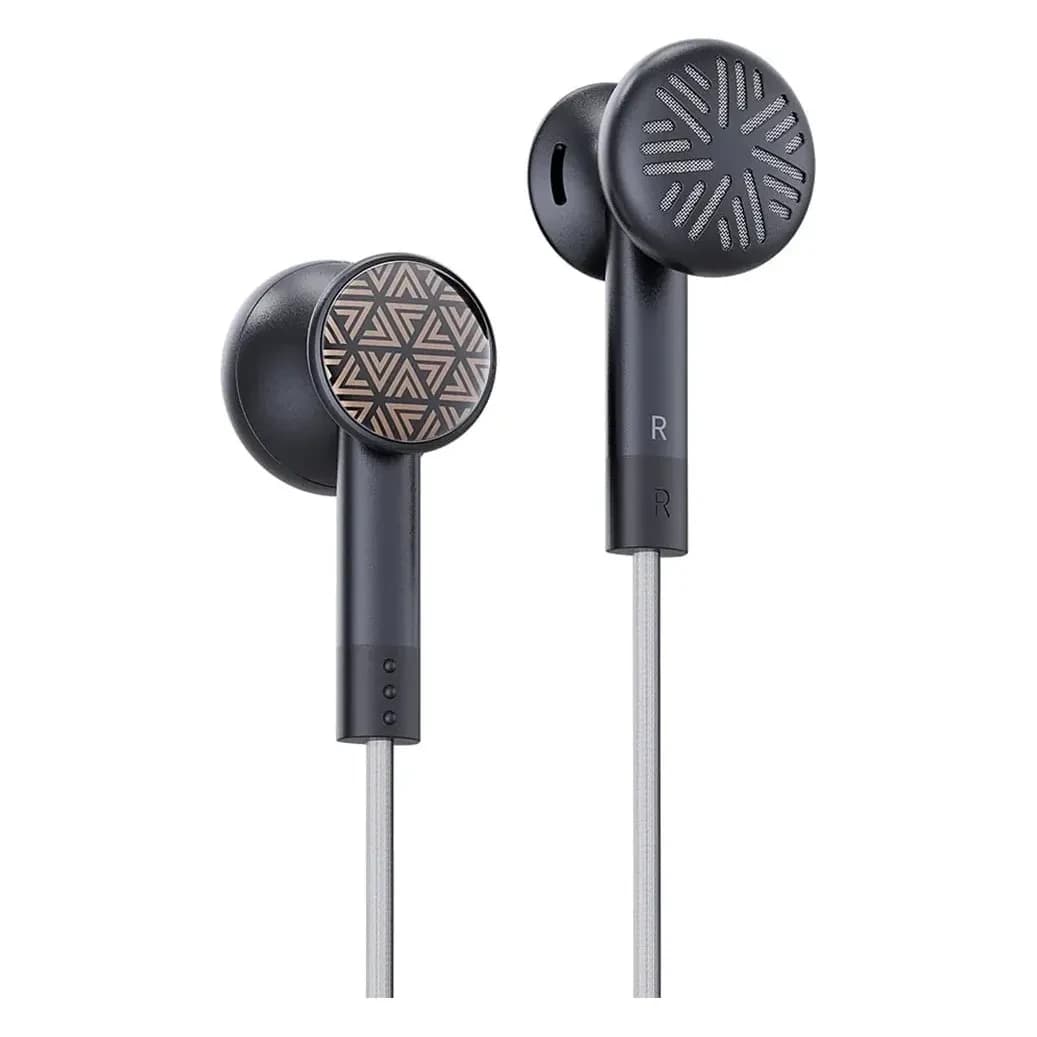
If an IEM from us really doesn't fit, you can send it back within 30 days. Opened and tried is fine, just include all the ear tips. And if no universal IEM gives you a good fit, a hearing care professional can have an IEM made to an impression of your ear. We don't sell those, but they're the answer for ears that nothing stays in.
Products in this guide
Read next
- 8 min readEQ for beginners: small changes, big differenceWhat an equalizer does, how to use a measured graph to pick two or three small corrections, a worked example with the KZ EDX Pro, and free apps for Android, iPhone, Windows and Mac.
- 9 min readMusic to test your IEMs or headphonesHow to listen when you compare two pairs, which tracks show bass, vocals, sibilance, cymbals, space and busy passages clearly, and a checklist for your own favourites.
- 6 min readCleaning and caring for your IEMsHow to clean nozzles and ear tips without damaging anything, what to do after a sweaty session, how to treat the cable, and how to tell what's wrong when one side sounds off.