By Rejhan Kavazbasic · 8 min read · Updated 5 November 2026
From AirPods to your first real in-ears
What changes when you move from wireless earbuds to IEMs: seal, cable and tips, what you gain and what you give up, how to stay wireless and what to buy between €20 and €100.
What's actually different
AirPods, Galaxy Buds and IEMs are all earphones, but they sit in your ear differently. Regular AirPods rest loosely in the bowl of your ear. The Pro models from Apple and Samsung have a short silicone tip that closes off the entrance of your ear canal. An IEM (in-ear monitor) usually goes a little further: the tip sits in your ear canal, the shell rests in your ear and the cable often runs over the top of it.
Seen from the side: your outer ear on the left, your eardrum on the right.
AirPods (not Pro)
Not sealed
Rests loosely in the bowl of your ear. A gap stays open, so you hear your surroundings and some of the sound leaks out.
AirPods Pro, Galaxy Buds Pro
Sealed at the entrance
A short silicone tip closes off the entrance of your ear canal. Noise cancelling removes low rumble on top of that.
IEM
Sealed in the ear canal
The tip usually sits a little deeper, the shell rests in your ear and the cable runs over it. The quiet comes from the seal.
That tip does two jobs at once. It keeps outside sound out, and it closes off a small space in which the driver can build up pressure. You hear that pressure as bass. An IEM that seals well sounds full, one that leaks sounds thin. Our ear tips guide explains how that works.
IEMs come from the stage. Musicians use them to hear their own mix, so they're made to stay put while you move. You can still tell: a solid shell, a cable that comes off and a shape that locks into your ear.
What you gain
- Your money goes into the sound. With wireless earbuds you also pay for a battery, a Bluetooth chip, microphones and a charging case. With an IEM it all goes into the driver and the shell. That's why €24 already buys an IEM with a 10 mm driver and a detachable cable.
- A choice of sound. There are IEMs with lots of bass, with a neutral tuning or with clear vocals. Most IEMs in our range have a published measurement on the product page, so you see what you get before you buy.
- A cable you can replace. If the cable breaks, you buy a new cable, not new earphones.
- No battery to wear out. A wired IEM has no battery. The battery in wireless earbuds degrades after a few years and usually can't be replaced by you.
- No delay. Wired, the sound arrives straight away. Nice for games, and when you play or sing along with music.
What you give up
To be fair, AirPods do a few things an IEM can't.
- Noise cancelling. An IEM has no ANC. A good seal damps a lot, especially voices and higher sounds, but ANC is better at removing the low rumble of a plane or bus. Foam tips come closest.
- Transparency mode. Want to hear someone without taking your earphones out? With an IEM you take one out.
- Convenience. No automatic pause when you take one out, no switching by itself between phone and laptop, no finding them with an app.
- The microphone. Many IEMs come with a cable without a mic. Of our KZ models, only the grey ZSN Pro has one.
- The cable itself. It can snag on things, and you hear it tap when it rubs against your collar. Wearing it over your ear helps most.
- The plug. Many phones no longer have a headphone jack. Then you need a small USB-C dongle, or you stay wireless. More on that below.
Keep both
You don't have to choose. Keep your AirPods for calls and quick listening, and reach for your IEMs when you sit down for an album.
Connecting, with or without a wire
| Your phone | With a cable | Without a cable |
|---|---|---|
| With a 3.5 mm jack | Plug straight in | Bluetooth cable or clip-on receiver |
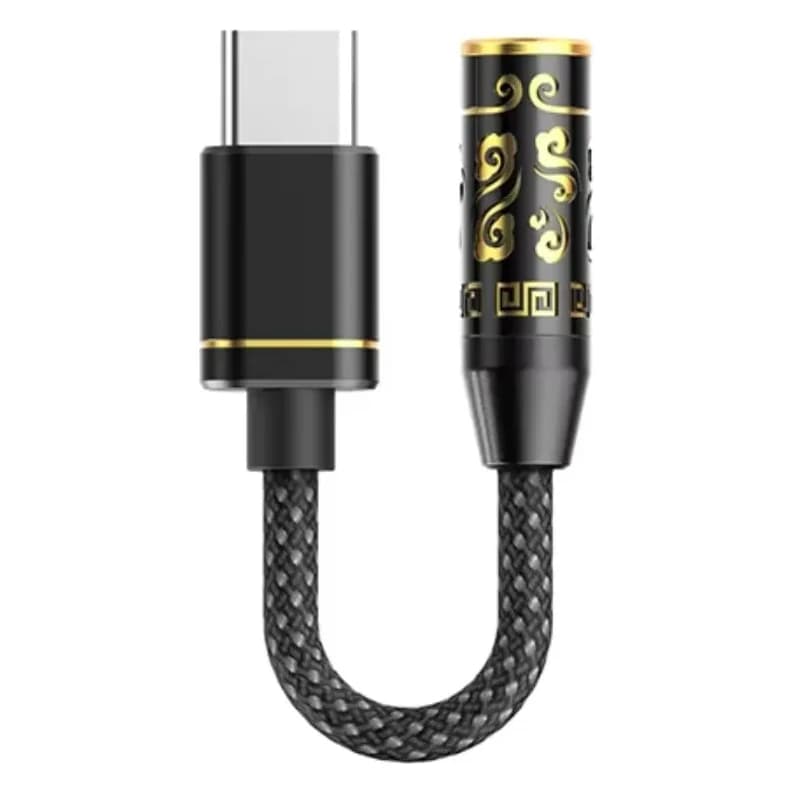
| USB-C (Android, iPhone 15 and newer) | USB-C dongle, such as the FiiO JIEZI A (€22.95) | Bluetooth cable or clip-on receiver |
| Lightning (older iPhones) | Apple's Lightning to 3.5 mm adapter | Bluetooth cable or clip-on receiver |
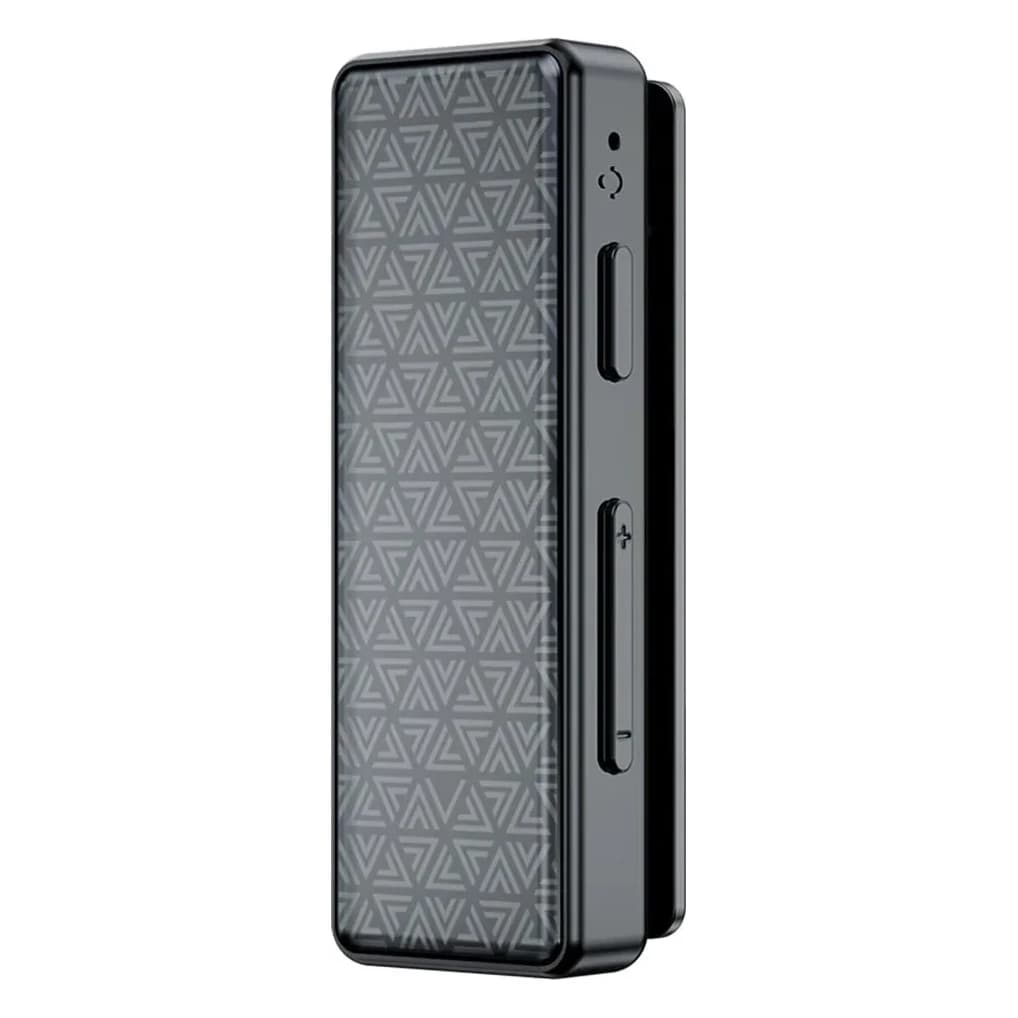
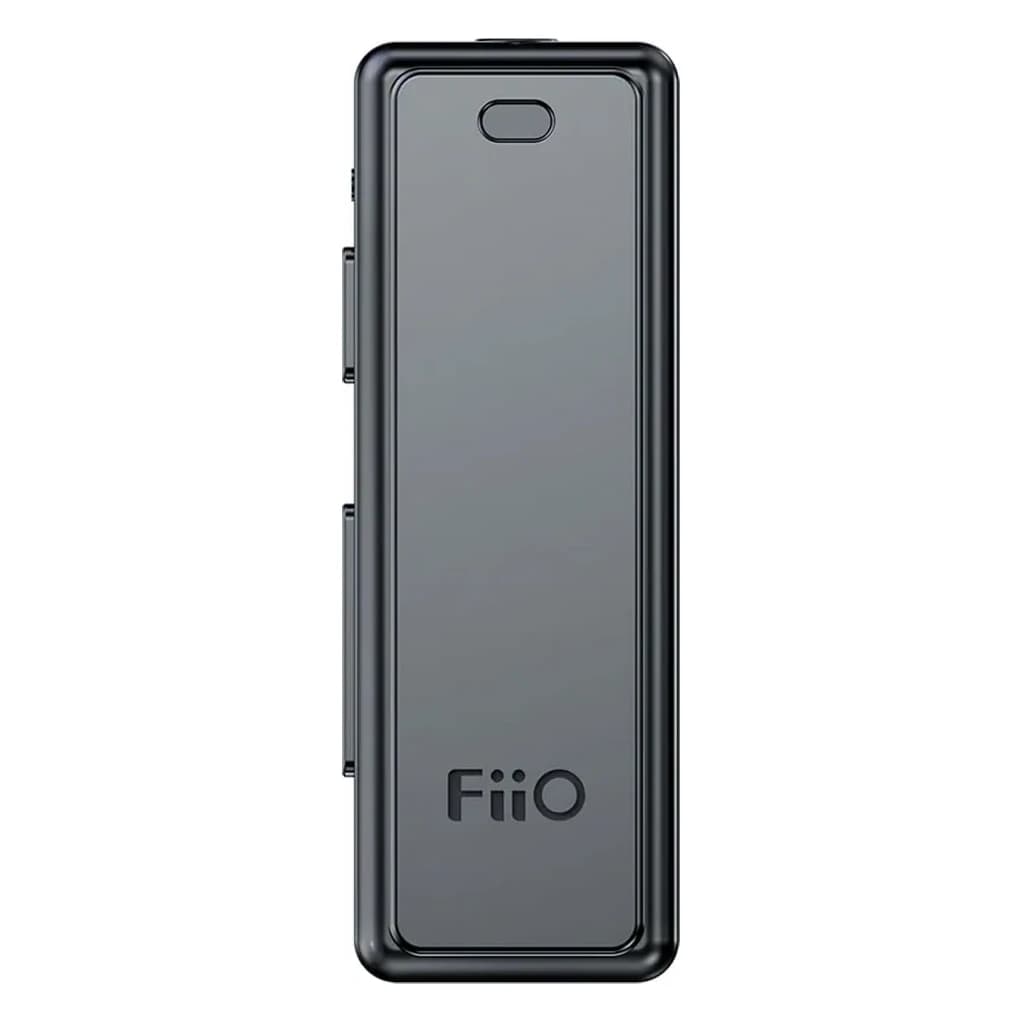
Don't want a wire to your phone? KZ IEMs with a type C socket, such as the EDX, EDX Pro, ZSN Pro and ZS10 Pro, take our KZ aptX Bluetooth cable (€29). It replaces the normal cable. For any other IEM with a 3.5 mm plug there's a clip-on receiver, such as the FiiO BTR11 (€24.95). It has a microphone for calls too.
On an iPhone the KZ cable runs over SBC, because iPhones don't support aptX. The BTR11 uses AAC on an iPhone, just like your AirPods. Codecs, range and delay are explained in our guide to wireless IEMs.


What to buy between €20 and €100
The fun part of IEMs: for the price of one pair of wireless earbuds you can try two very different tunings. The graph shows how far apart three models are.
- EDX Pro
- Chu
- T2
Measured by Super* Review (IEC 711 clone), published on squig.link. Independent measurement, not by us. Measuring rigs differ slightly above 8 kHz.
- €24, lots of bass: the KZ EDX Pro. Lively, easy to drive (112 dB/mW), with a cable without a mic.
- €24, less bass: the Moondrop Chu in a metal shell. A good pick if your AirPods felt too boomy.
- €29, with a mic: the grey KZ ZSN Pro, a hybrid with one dynamic driver and one balanced armature.
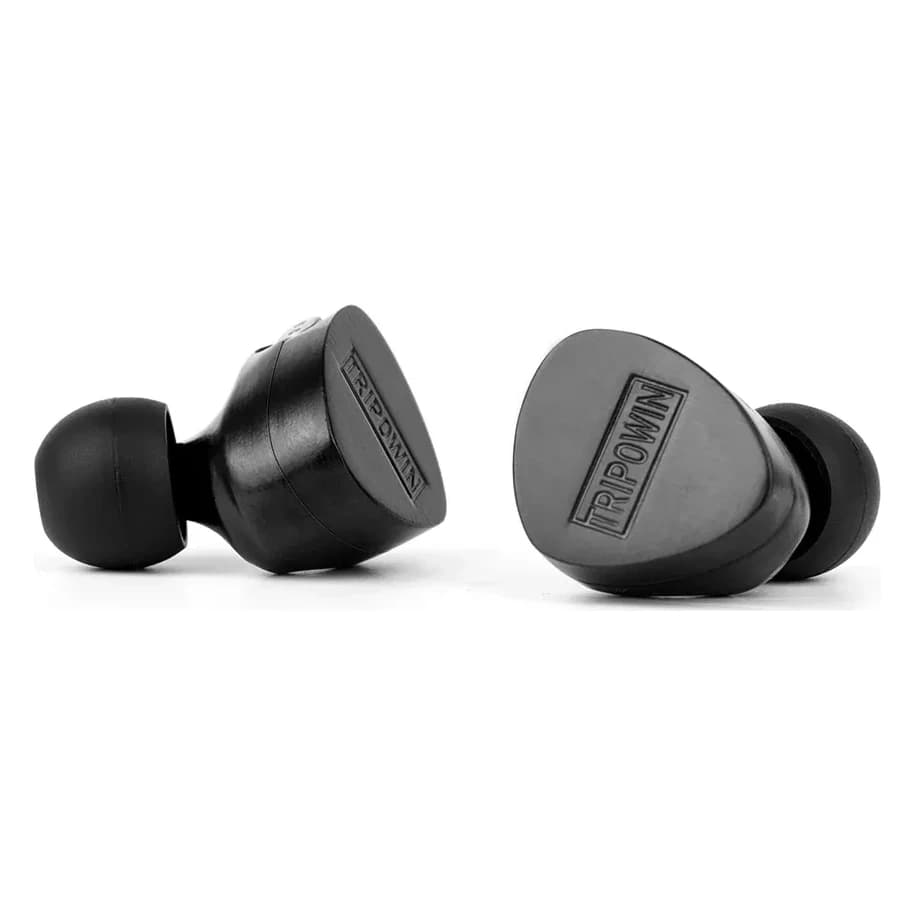
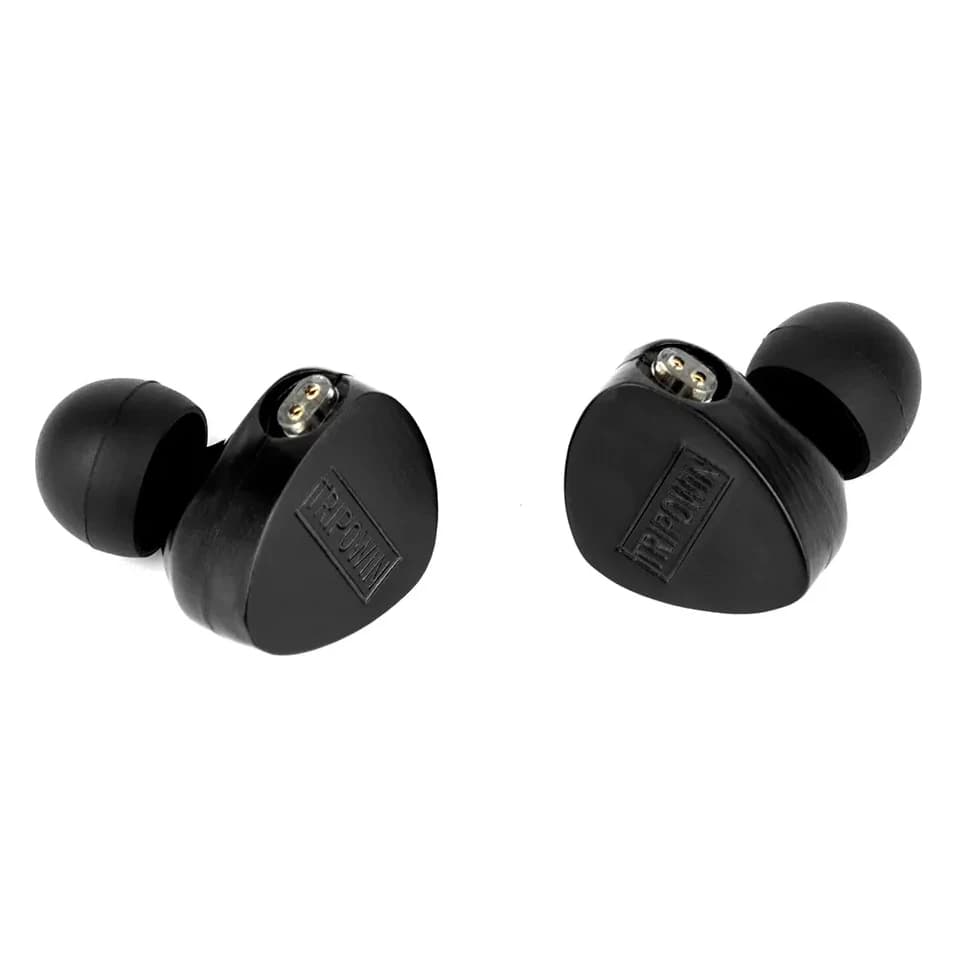
- €29, calm: the Tripowin Leá. Its bass stays close to the target, its treble is a little reserved.
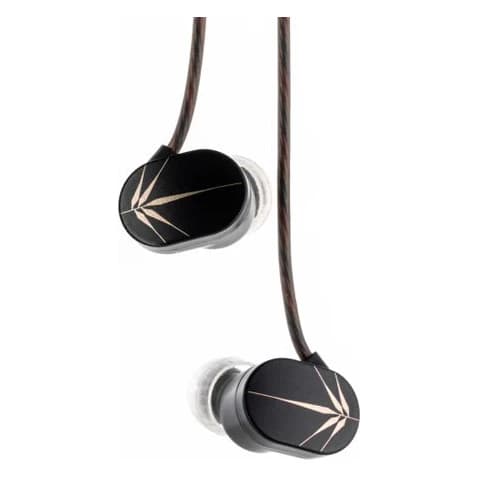
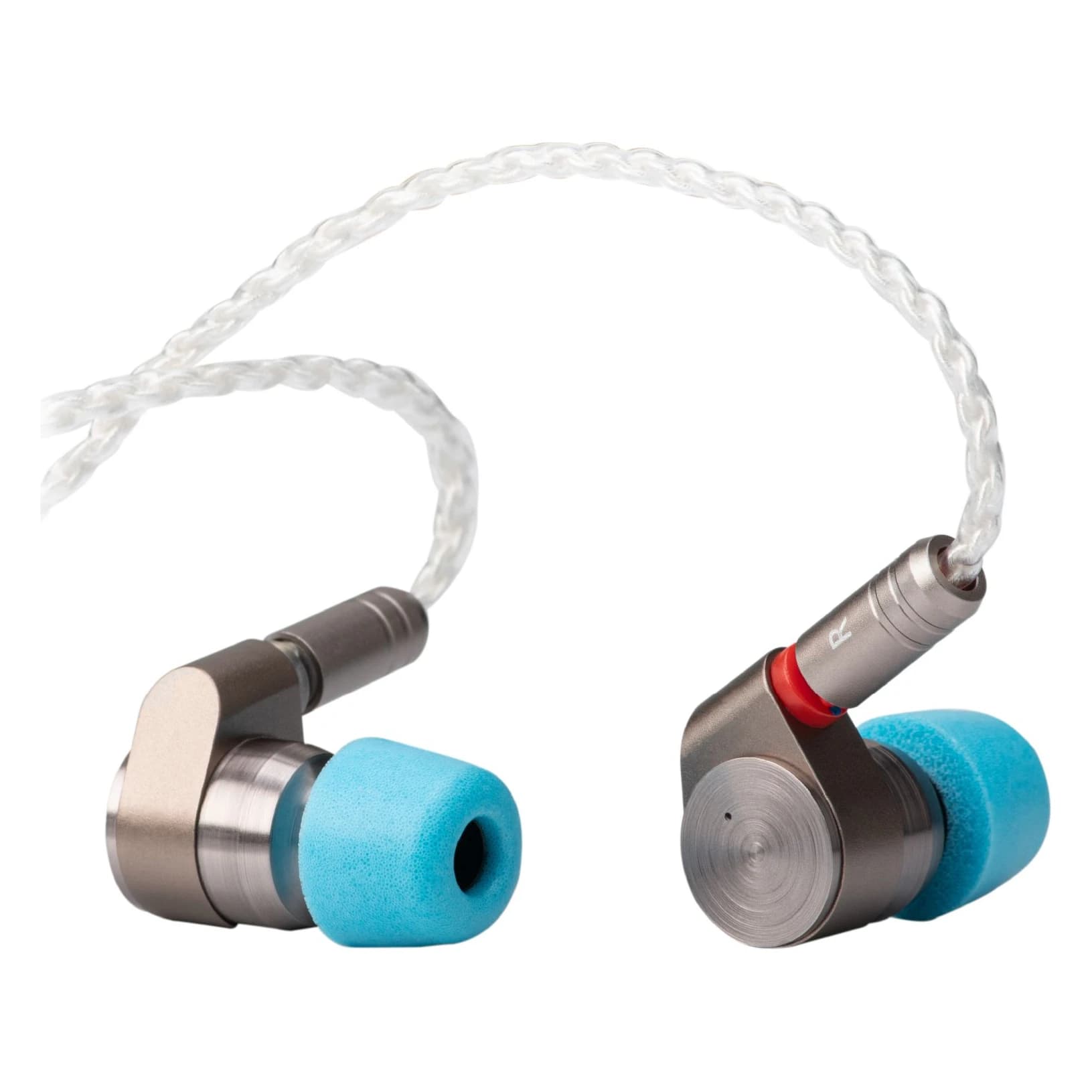
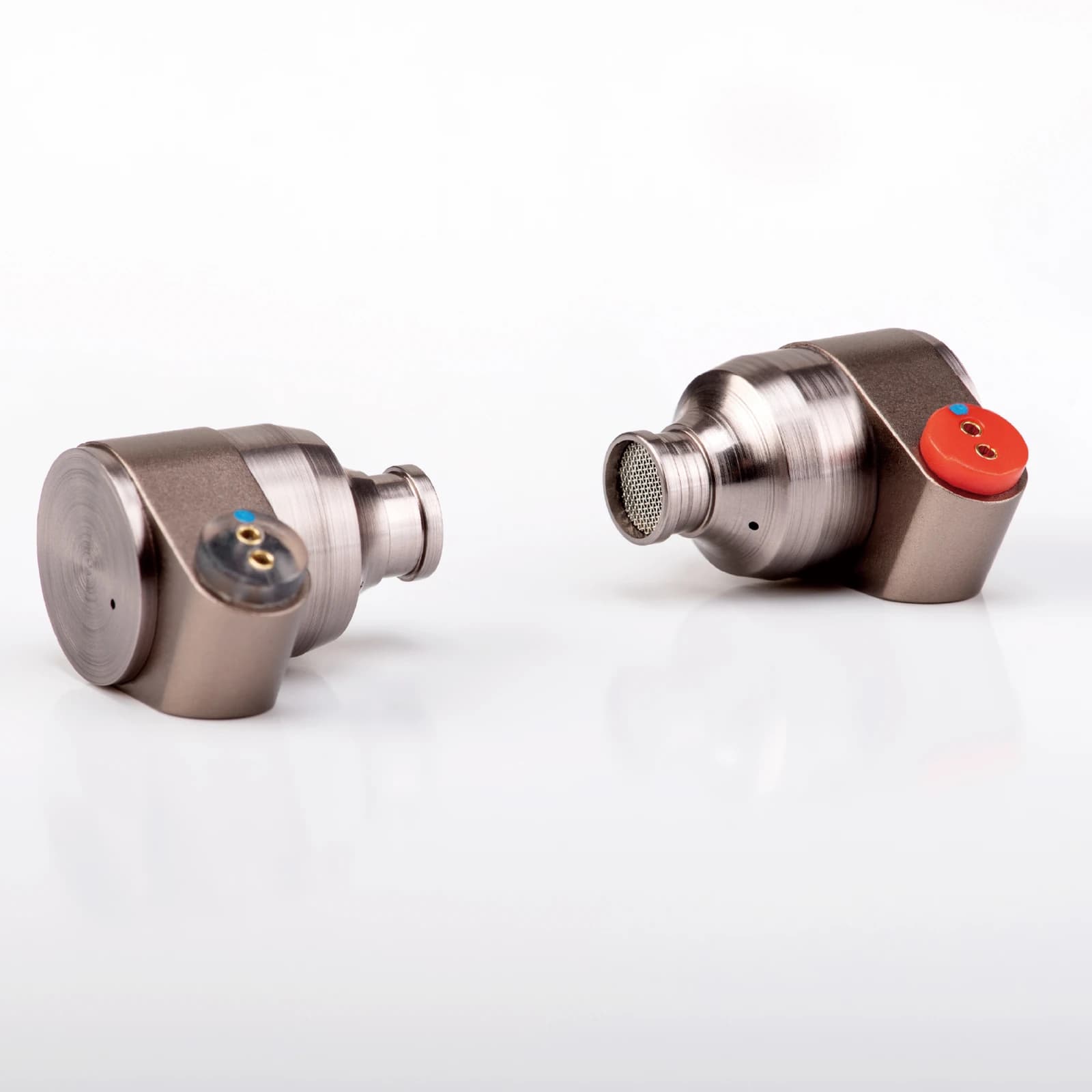
- €49, slim and metal: the TinHiFi T2, with two dynamic drivers and an MMCX cable. Measured, it has clearly less bass and less treble than the target, which puts voices more up front.
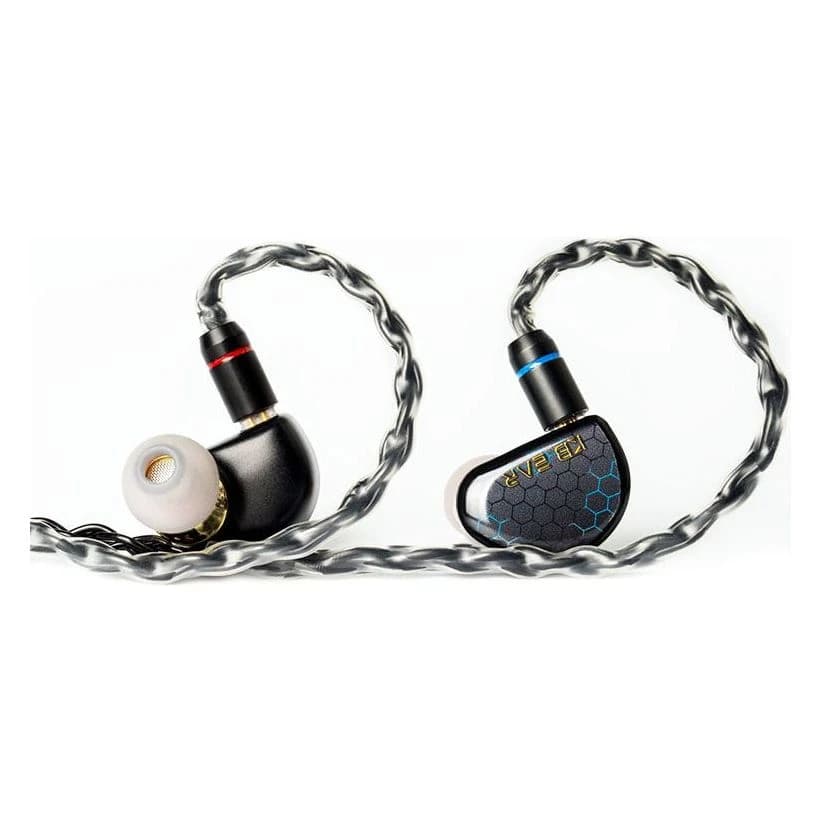
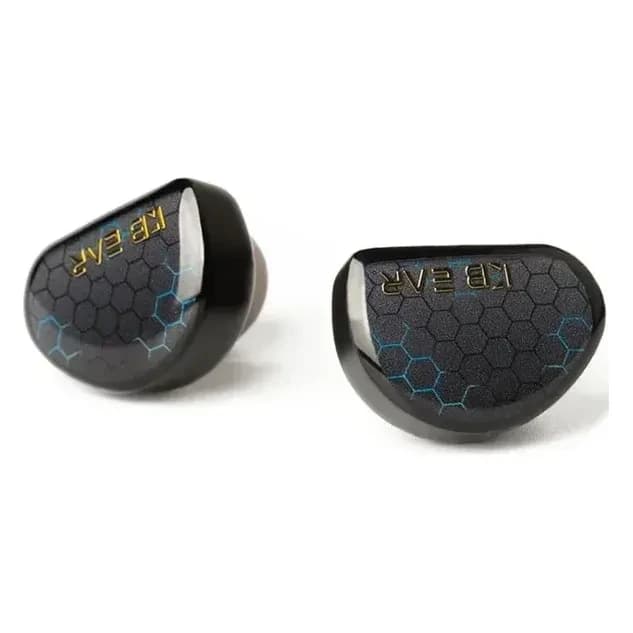
- €59 to €99: the KBEAR Ink (€59, more bass and more treble than the target), the FiiO FH11 (€59.95, a hybrid with a 10 mm driver and a balanced armature) or the 7Hz Salnotes Dioko (€99) if you want a planar driver straight away.
Did you like regular AirPods precisely because they don't seal? Then an earbud may suit you better. It rests in your outer ear without a tip. The FiiO FF3S (€99.95) is one, with a detachable cable. Expect less bass and less isolation than from an IEM.



Prices as of November 2026. The product page shows the current price and delivery time.
Your first week
- Start with the middle tip size. M is usually fitted already. Try S and L for each ear too. Left and right may differ.
- When you put them in, pull your ear gently up and back with your other hand. Put the IEM in and turn it a little until it locks into the bowl of your ear.
- Lay the cable over your ear if the IEM is made for that. Check L and R: the left one goes in your left ear.
- Start with the volume low and only turn it up once the IEMs are in. A good seal keeps noise out, so you need less volume. And sensitive models like the EDX Pro get loud quickly on a phone.
- Say something. If your own voice sounds muffled and close, it's sealed. That's how it should be.
- Give your ears a few days. A tip in your ear canal feels strange at first, and you're used to the sound of your old earbuds. Judge after a week, not after an hour.
Not comfortable yet?
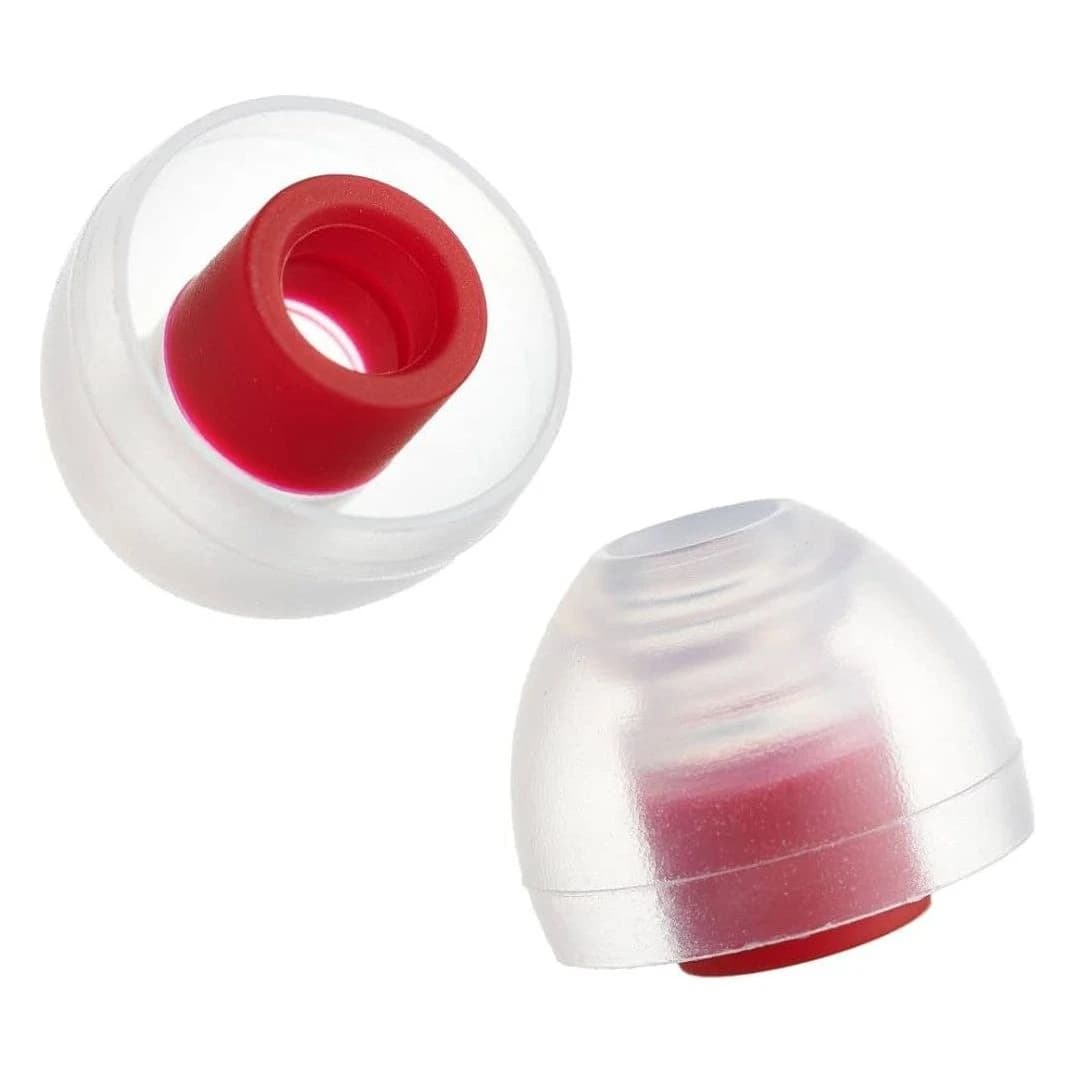
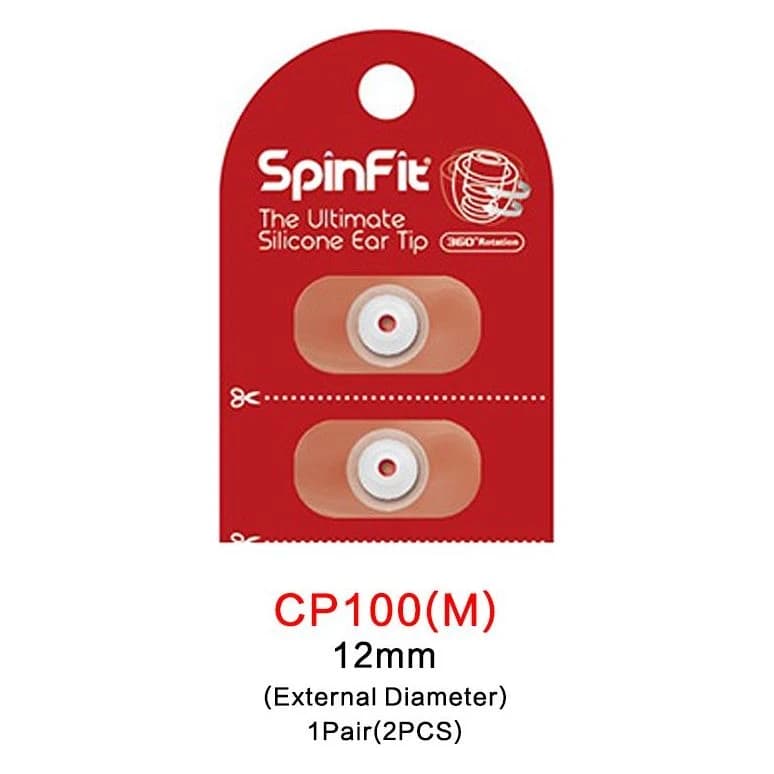
Does it hurt, fall out or sound quieter on one side? Our guide to fit problems walks you through it by symptom. Want to try tips without guessing? The FiiO HS19 holds twelve pairs in five types.
If an IEM really doesn't suit your ear, you can send it back within 30 days. Opened and tried is fine, just include all the ear tips.
Products in this guide
Read next
- 9 min readIEMs up to €50 comparedEvery IEM we sell for €50 or less side by side: drivers, connector, price and what independent measurements show. Plus which model suits which listener.
- 8 min readChoosing headphones: open or closed, dynamic or planarEvery over-ear and on-ear headphone we sell side by side: open or closed, driver type, how much power it needs and how heavy it is. Plus which one suits where you listen.
- 4 min readGifts for music lovers: from €10 to €100Gift ideas for Sinterklaas and Christmas for anyone who loves music: IEMs, dongles, ear tips and studio gear, by budget.