By Rejhan Kavazbasic · 7 min read · Updated 30 October 2026
IEM drivers explained: dynamic, balanced armature, planar and hybrid
How the different drivers in an IEM work, what each type is good at and what a measurement does and doesn't tell you about them.
What a driver does
The driver turns the electrical signal from your phone or DAC into sound. It moves a thin membrane back and forth, and that pushes air through the nozzle into your ear canal. In an IEM it's tiny: the 10 mm dynamic driver in the KZ EDX Pro or Moondrop Chu is smaller than your thumbnail.
The shell, the nozzle and small filters or vents shape the sound as well. That's why two IEMs with the same kind of driver can sound very different.
The three basic types
Dynamic
Moving diaphragm: punchy, natural bass
Balanced armature
Tiny, precise; often for mids and treble
Planar
Thin film between magnets: fast, detailed
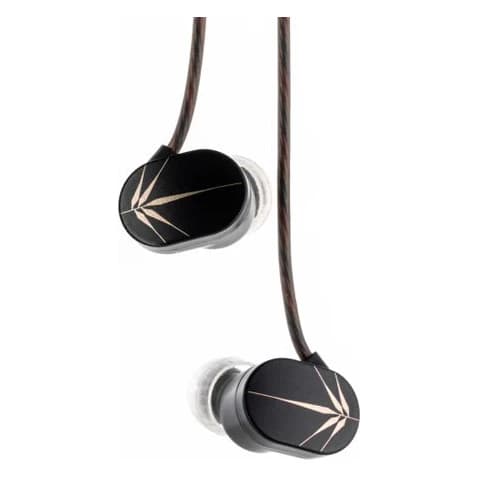
- Dynamic: works like a small loudspeaker. A coil attached to the membrane moves in the field of a magnet. It moves a lot of air, which makes it good at natural, physical bass. Makers experiment with the membrane material, such as LCP in the Tripowin Leá or bio-fibre in the WGZBLON BL-01.
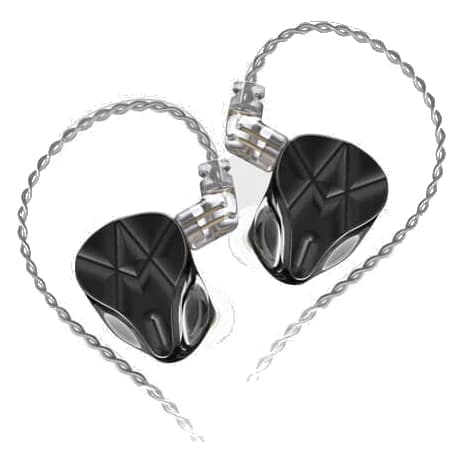
- Balanced armature (BA): a small metal arm, balanced between two magnets, drives a tiny membrane through a pin. It all sits in a closed box of a few millimetres. The technology comes from hearing aids. BAs are efficient and good at detail in the mids and treble, but one BA rarely covers the whole range well, so they usually work in groups. The KZ ASF has only BAs: five per side and no dynamic driver.
- Planar magnetic: a very thin film with a printed conductor, stretched between magnets. The whole surface is driven at once instead of from one point, which keeps distortion low. Planar IEMs are often less sensitive, so you turn the volume up a bit further. The 7Hz Salnotes Dioko is one.
Hybrids and tribrids
A hybrid combines driver types in one shell. Usually a dynamic driver does the bass and one or more BAs take the mids and treble. A crossover splits the work: a few small components in the shell, or simply the length of the sound tubes.
- KZ ZST and KZ ZSN Pro: one dynamic driver and one BA per side.
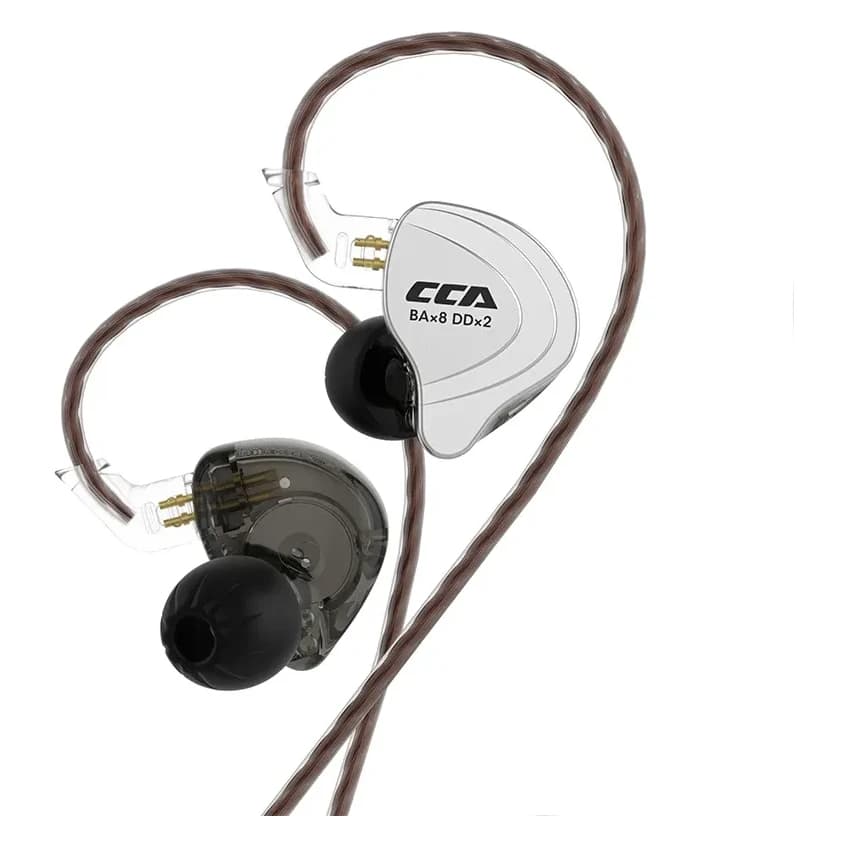
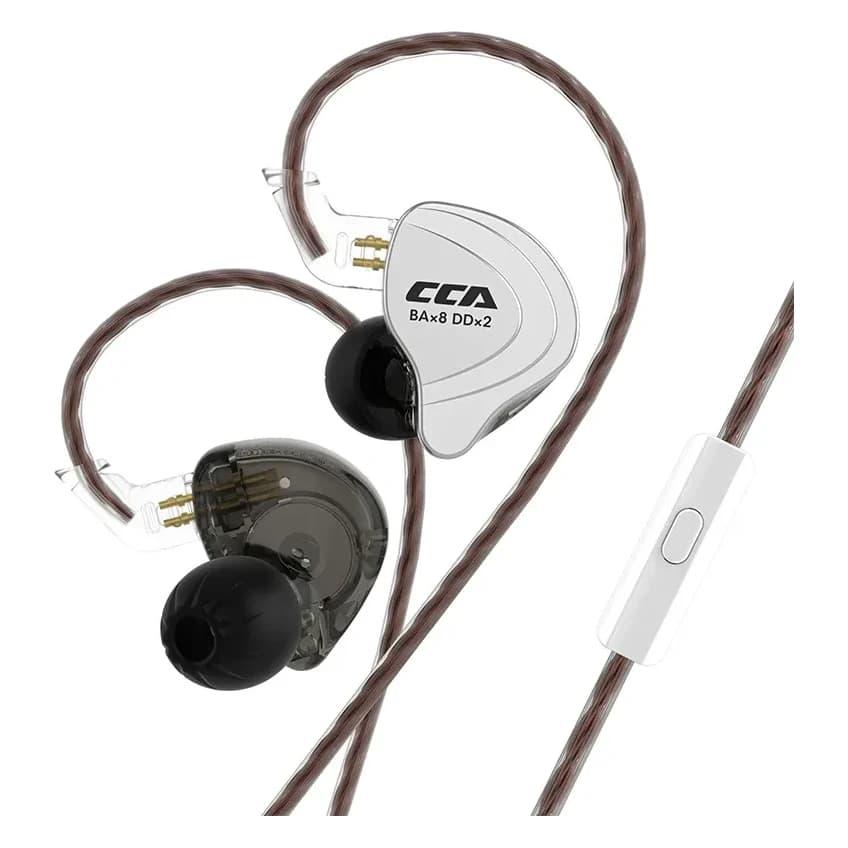
- KZ ZS10 Pro and CCA C10: one dynamic driver and four BAs per side.
- KZ ZEX: a dynamic driver with an electrostatic driver for the treble.
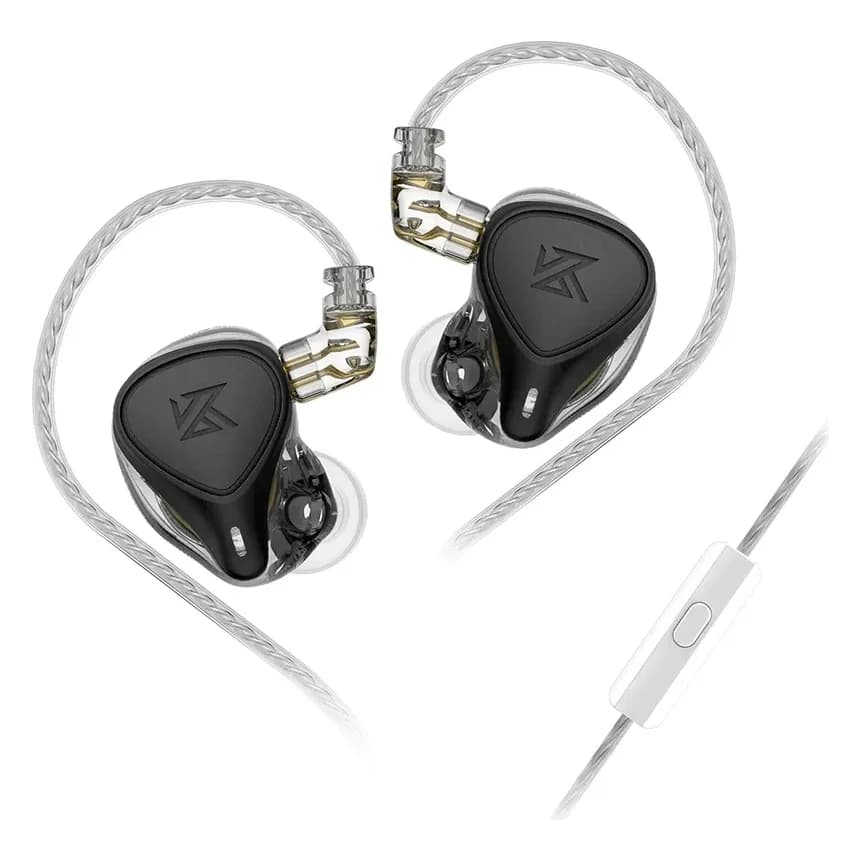
- KZ ZEX Pro: a tribrid with a dynamic driver, a BA and an electrostatic driver.
An electrostatic driver is a charged film between two perforated plates. In IEMs it comes with a small transformer in the shell, so it plays from a normal headphone output. There are also IEMs with two drivers of the same kind, such as the TinHiFi T2 with two dynamic drivers.
The hard part of any multi-driver IEM is the hand-over. If the drivers overlap or leave a gap, you hear it as a peak or a dip. More drivers means more hand-overs to get right.
Side by side
| Type | How it works | Good at | Watch out for | In our range |
|---|---|---|---|---|
| Dynamic | Coil and membrane in a magnetic field | Natural, physical bass | Detail depends a lot on the tuning | KZ EDX Pro, Moondrop Chu, Tripowin Leá, TinHiFi T2 |
| Balanced armature | Tiny arm drives a membrane through a pin | Detail, small size, efficiency | Bass less physical than a dynamic driver | KZ ASF (five per side), and in our hybrids |
| Planar | Thin film with a conductor between magnets | Low distortion, clean sound | Often needs more volume | 7Hz Salnotes Dioko |
| Hybrid | Dynamic for the bass, BA or electrostatic for the rest | Bass and detail in one shell | The hand-over between drivers | KZ ZST, ZSN Pro, ZS10 Pro, ZAS, ZEX, ZEX Pro, CCA C10 |
Three driver types in one measurement
A measurement shows what this means in practice. Below are three IEMs: the Moondrop Chu with one dynamic driver, the CCA C10 as a hybrid with one dynamic driver and four BAs, and the planar 7Hz Salnotes Dioko. The dashed line is the target curve.
- Chu
- C10
- Salnotes Dioko
Measured by Super* Review (IEC 711 clone), published on squig.link · Measured by Aftersound (IEC 711 clone), published on squig.link. Independent measurement, not by us. Measuring rigs differ slightly above 8 kHz.
- Bass: the C10 has the most mid-bass. Between 100 and 200 Hz it sits 3 to 4 dB above the line, which sounds warm and full. The Dioko stays close to the line in the deep bass. The Chu sits a few dB under it, about 3 dB in the deep bass: lean and tidy.
- Upper mids, 2 to 5 kHz: the Chu rises smoothly and follows the shape of the line, about 2 dB below it. The C10 is more uneven, with a peak around 2 kHz, a dip around 3.5 kHz and another peak around 4.5 kHz. The Dioko stays lowest here, about 4 dB under the line at 3 kHz, so voices and guitars sound more relaxed.
- Around 8 kHz all three show a peak. In that region the result depends a lot on the coupler and on how deep the IEM sits, so don't read too much into it.
What this shows: the driver type doesn't predict the sound. Here the planar has more deep bass than the dynamic driver, and the hybrid with five drivers per side is less even than the single dynamic. The tuning makes the difference.
BAs aren't automatically light in the bass either: the KZ ASF, with five BAs and no dynamic driver, measures more bass than any other IEM we have a measurement for.
What this means when you choose
- Plenty of bass on a small budget: the KZ EDX Pro with one dynamic driver, or the KZ ASF with five BAs. Both sit well above the line in the low end of their measurements, the ASF the most.
- Calm and close to the target: the Moondrop Chu.
- A big, detailed sound with warm bass: a hybrid such as the CCA C10 or KZ ZS10 Pro.
- A clean sound with relaxed upper mids: the planar 7Hz Salnotes Dioko.
Compare curves, not driver counts
Where a product page shows a published measurement, compare it with the dashed target line. That tells you more about the sound than the number of drivers on the box.